AI invoice processing: what finance teams should deploy now
AI invoice processing can already handle a large share of routine invoices, cutting cost and cycle time without a full staffing overhaul. Exceptions still need human review, so the honest verdict is: pilot a representative vendor segment now, keep approval authority with people, and fix your vendor master data before you scale. Governance frameworks like SOX still apply, and with the HMRC e‑invoicing timetable moving towards mandatory adoption, waiting has a real cost. Practitioners at firms like Real-studios see this pattern repeat across every serious rollout.
TL;DR:
- ROI is most evident through reduced cost per invoice, faster cycle times, and increased straight-through processing rates, especially in high-volume, PO-backed vendor segments.
- Known trouble spots include multi-page freight bills, foreign currency invoices, long-tail vendor formats, and credit memos, which require tailored routing or retraining.
- Effective controls demand strict segregation of duties, immutable audit trails, and mandatory human review for vendor data changes to maintain audit readiness.
- Starting with a pilot on clean vendor data and a representative vendor segment, and fixing vendor master data beforehand, greatly improves learning curves and automation success.
Table of Contents
- What is invoice processing AI and how does the pipeline work?
- How accurate is AI at extracting and matching invoice data?
- What ROI and KPIs should finance teams expect?
- How do you run a safe AP automation pilot?
- Why do AP automation projects break in production?
- What controls keep automated invoice processing audit-ready?
- A UK practitioner's view from live deployments
- Build, buy, or bring in a consultancy?
- Get your AP automation pilot built by Real-studios
- Sources
What is invoice processing AI and how does the pipeline work?
Invoice processing AI covers the full chain from the moment a bill lands to the moment it posts in your ERP. Each stage does a distinct job, and understanding them helps you interrogate vendor claims rather than accept a demo at face value.
- Capture — the invoice enters the system as a file or scanned image.
- Extraction — OCR or intelligent document processing (IDP) pulls out fields like invoice number, amount, and line items.
- Classification — the system decides invoice type: PO-backed, non-PO, credit memo, freight bill.
- Matching — extracted data is checked against purchase orders and goods receipts.
- Approval routing — invoices move to the right approver based on value, department, or exception status.
- ERP posting — approved data writes back into your accounting system.
Template-free IDP differs from classic rule-based OCR because it doesn't need a pre-mapped layout per vendor. Machine learning and large language models learn field patterns across formats, which matters given how many invoices still arrive as email PDFs, supplier-portal downloads, EDI feeds, or scanned paper.
How accurate is AI at extracting and matching invoice data?
Vendor accuracy claims almost always describe field-level accuracy, meaning any single field, such as an invoice date, gets read correctly. Document-level accuracy measures whether the entire invoice, every field, every line, is correct with no manual touch. The gap between the two is usually significant.
Statistic callout: Manual invoice entry carries an average error rate of roughly 10%, according to government consultation data on e‑invoicing. AI extraction, run with conservative thresholds, aims to beat that baseline rather than promise perfection.
Confidence scores are the practical safeguard. A well-designed system flags low-confidence fields for human review instead of posting them straight through, and mature teams tighten or loosen that threshold as the model proves itself on real exceptions.
Known weak spots recur across deployments:
- Multi-page tables where line items span several pages.
- Line-item composition on complex invoices with nested discounts or tax splits.
- Foreign-currency formatting, especially decimal and thousands-separator conventions.
- LLM hallucinations, where a model invents a plausible-looking value rather than flagging uncertainty.
Tracking field-level accuracy alongside document-level accuracy and exception causes gives you a far more honest picture than a single headline accuracy figure.
What ROI and KPIs should finance teams expect?
The business case rests on a genuine but bounded gap: only 29% of UK SMEs currently use e‑invoicing, and just 10% both send and receive electronic invoices, according to government research into SME usage and attitudes.
Statistic callout: Government consultation research suggests e‑invoicing adoption can reduce manual processing costs by 60% to 80%, and broader economic modelling from Avalara points to nearly $9 billion in potential UK gains from wider adoption.
Track outcomes, not activity. The metrics that matter:
- Cost per invoice processed, from capture to posting.
- Cycle time from receipt to approval.
- Straight-through processing rate (touchless invoices as a share of total volume).
- Exception backlog size and average resolution time.
- Early-payment discount capture, which often pays for the whole project.
Value comes from three places: fewer manual keying hours, fewer misposted entries, and a faster monthly close. Automation rate alone is a vanity metric if exception quality doesn't improve alongside it.
How do you run a safe AP automation pilot?
A structured rollout protects your books while you learn what the model can actually do. Implementation guides consistently point to the same high-leverage preparatory steps, and skipping them is the most common reason pilots stall.
- Baseline your metrics — capture current cost per invoice, cycle time, and error rate before you change anything.
- Map your invoice mix — split PO-backed from non-PO volume; they behave very differently under automation.
- Clean vendor master data — duplicate or incomplete vendor records limit straight-through rates more than any model weakness does.
- Select a pilot scope — pick a high-volume, PO-backed vendor segment with representative exceptions, not just the easy cases.
- Decide your architecture — ERP-native tools reduce integration overhead; external platforms can offer stronger extraction but need careful sync design.
- Build idempotent ERP write-back — every retry must be safe, never creating duplicate postings.
- Set conservative confidence thresholds — start tight, define exception queues with clear SLAs, and loosen only as accuracy proves out.
- Measure and iterate — review exception causes weekly during the pilot and retrain or reroute based on what actually fails.
Pro Tip: Run your pilot on a vendor segment that already has clean master data. If you fix data quality and test extraction accuracy at the same time, you won't know which one caused the result.
Why do AP automation projects break in production?
Certain invoice types cause disproportionate trouble once volume climbs. Field reports from production deployments point to the same recurring clusters: long-tail vendor formats that appear too rarely to train on well, multi-page freight bills, and credit memos that confuse matching logic built for standard invoices.
- Long-tail vendors with one-off, inconsistent invoice layouts.
- Multi-page freight and logistics bills with line items split across sheets.
- Credit memos and adjustment notes that don't map to a normal PO structure.
- Foreign-currency invoices with unfamiliar formatting conventions.
The operational fallout is predictable: exception backlogs grow, staff duplicate work chasing unmatched items, and misposted general ledger entries slip through if thresholds are too loose. The fix isn't more automation, it's better routing: send known problem categories straight to a human queue, tighten vendor onboarding requirements, and retrain the model specifically on the formats causing the most exceptions rather than the whole dataset.
What controls keep automated invoice processing audit-ready?
Automation cannot be allowed to collapse the checks that stop fraud and errors. Segregation of duties has to survive the redesign: the same system or user that sets up a vendor record must never also approve payment to that vendor. That separation is the single most important control in AI invoice approval, and auditors will ask for it explicitly.
- Log every automated action, extraction, match, routing decision, in an immutable audit trail.
- Apply SOX-style review requirements to any AI-driven billing process touching financial statements.
- Route bank-detail changes and new-vendor events to mandatory human review, no exceptions.
- Run duplicate-invoice and fraud-pattern checks before anything reaches the posting stage.
Pro Tip: Treat every vendor bank-detail change as a security event, not a data update. It's the single most common vector for invoice fraud once automation removes manual double-checking.
A UK practitioner's view from live deployments
Teams that watch a shared inbox for incoming invoices often discover the same failure pattern within the first few weeks: a supplier changes their template slightly, and extraction confidence drops silently until someone notices a mismatch in the ledger. Redesigning exception routing around confidence thresholds, rather than trying to force higher automation rates, is usually what fixes it.
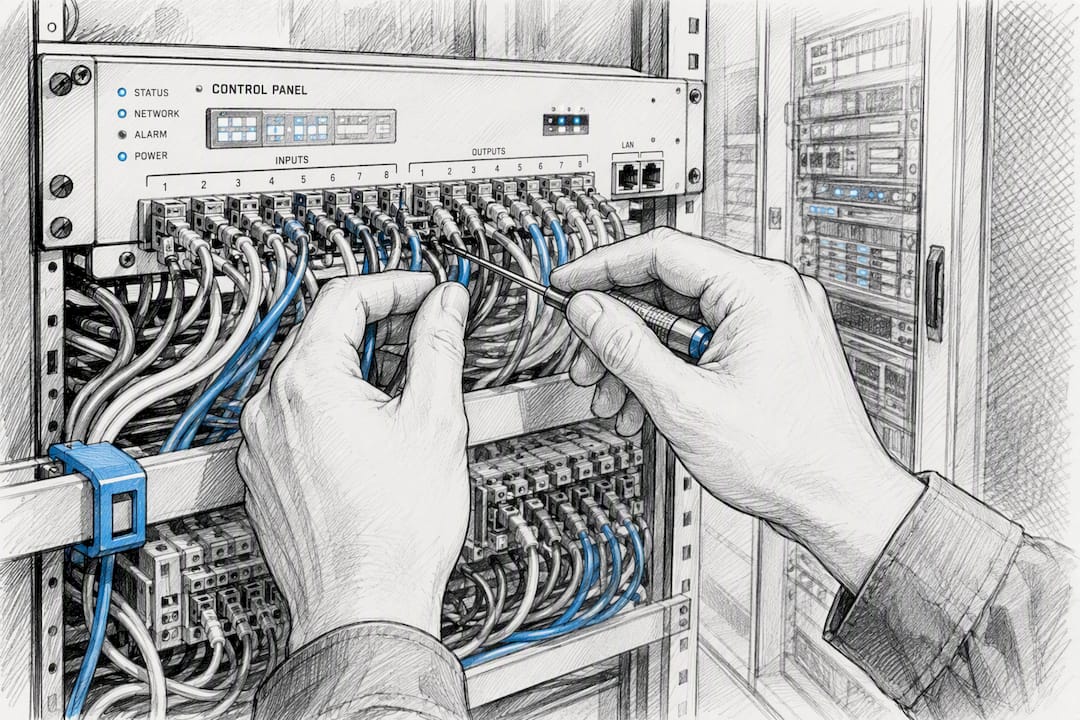
Teams that made this shift typically report a shorter monthly close and a smaller, more manageable exception backlog, not because the model got smarter overnight, but because the routing logic finally matched how invoices actually fail.
Build, buy, or bring in a consultancy?
ERP-native automation suits organisations with simple invoice mixes and low integration risk tolerance. A specialist platform earns its cost when extraction accuracy on complex documents genuinely matters more than integration simplicity. A consultancy fits when you need both, fast, without hiring a permanent AI team.
Ask any vendor how they handle idempotent write-back, what their document-level accuracy actually is, and who owns exception SLAs. Procurement and IT should agree on architecture before the pilot starts, not after it's built.
— Oded
Get your AP automation pilot built by Real-studios
Real-studios is the practical alternative to hiring an internal AI team or gambling on a generic platform: a scoped pilot, built and integrated, without the months of trial-and-error this guide has just walked through. Relevant services include Service Automations for the extraction and approval workflow itself, Service Integrations for ERP-native write-back, and Service MVP for a contained pilot that proves value before wider rollout.

A typical engagement runs through discovery audit, pilot build, ERP integration, and staff training, with support continuing after handover. If your invoice mix, vendor data, and exception rates need an honest assessment before you commit budget, book a discovery call and start with the pilot scope that actually fits your books.
Sources
For further reading on adoption rates and readiness, see the SME e‑invoicing usage research and the government e‑invoicing consultation. For integration patterns, the AP automation implementation guide from MDMS covers technical rollout considerations in more depth.
- Promoting electronic invoicing across UK businesses and the public sector (consultation)
- I put AI invoice OCR into production: what it actually gets wrong
- AI for invoice processing: A practical guide for finance teams (2026) | Dexity